

State's Post-Conviction Panel Brings Its First Road Meeting to the Gilmer County Courthouse Aug. 21
The Georgia House Blue-Ribbon Study Committee on Criminal Post-Conviction Litigation meets at 1 p.m. Friday, Aug. 21, in the jury assembly room at 1 Broad Street. It is the panel's first stop outside Atlanta, and the public can attend or ask to testify.
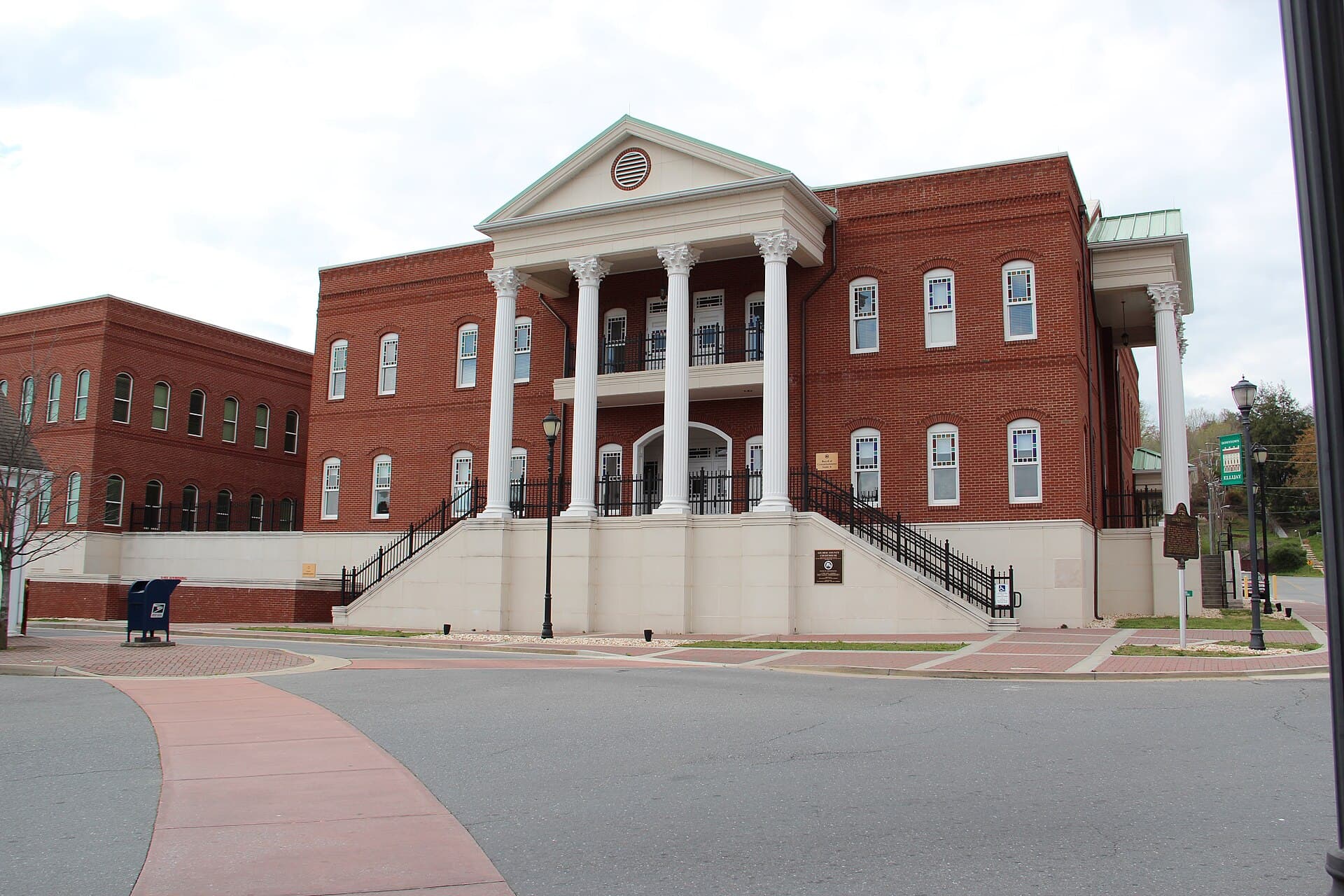
The state House committee weighing changes to how Georgia handles claims that a criminal conviction was obtained illegally will hold its next meeting inside the Gilmer County Courthouse, at 1 p.m. Friday, Aug. 21, in the Jury Assembly Room at 1 Broad Street in Ellijay. It is the committee's first meeting anywhere outside Atlanta, which means the policy fight over Georgia's appeals machinery lands in a room local residents can walk into, for free, on a Friday afternoon.
The panel is the House Blue-Ribbon Study Committee on Criminal Post-Conviction Litigation, chaired by Rep. Stan Gunter, a Blairsville Republican, former district attorney and chairman of the House Judiciary Committee. It has 12 members. It was created this year through House Resolution 1703, one of seven blue-ribbon study panels announced by Speaker Jon Burns, and its charge is to examine Georgia's post-conviction legal framework: protecting constitutional rights, cutting delays, and making the courts move faster. Recommendations are expected in time for the 2027 legislative session.
The Ellijay agenda is narrow and it is the hardest piece of the whole subject. Members will hear from stakeholders on what to do about ineffective-assistance-of-counsel claims, the argument a convicted person makes when they say their own trial lawyer failed them. It is the most common claim in post-conviction cases in Georgia.
Why that one issue is on the table
At the committee's first meeting on July 10 in Atlanta, Chief Justice Nels Peterson told the members that Georgia's system for reviewing convictions after the ordinary appeal is broken, that the courts themselves caused much of the damage, and that only the legislature can repair it. That is an unusual thing for the state's top judge to say to lawmakers about his own branch of government.
Under current Georgia practice, an ineffective-assistance claim is generally tangled up with the motion for new trial and the direct appeal, and it has to be argued by a different lawyer on a deadline. Peterson floated separating those tracks so each can move at its own speed, revisiting which courts hear post-conviction cases, and dealing with the problem of spotting a legitimate petition filed by a prisoner who has no attorney at all.
Rep. Scott Holcomb, an Atlanta Democrat and an attorney on the committee, laid out the practical reason for the logjam: a trial lawyer is not going to stand up and argue that they did a bad job, so somebody new has to be brought in and brought up to speed. He also said the fix would be more complicated and would likely cost the state money.
The July meeting drew testimony from the Georgia Association of Criminal Defense Lawyers, the Prosecuting Attorneys' Council of Georgia, the Georgia Innocence Project, the Georgia Public Defender Council and the Georgia Appellate Practice and Educational Resource Center. The public defender council told the committee its appellate operation is stretched well past capacity, and that most of the appeals it contracts out to private lawyers come from ineffective-assistance claims.
Attending, watching, or speaking
The meeting is open to the public and will be livestreamed through the House's schedule page. Anyone who wants to attend or give testimony is asked to contact the committee in advance rather than show up cold: committee assistant Summer Little, at Summer.Little@house.ga.gov or (404) 656-5121. Written input goes to the same address.
Testimony requests go through the committee's published contact, Summer Little, at Summer.Little@house.ga.gov or (404) 656-5121, ahead of the Aug. 21 meeting. Written comments can be emailed to the same address if you cannot make it to the courthouse.
Advocacy groups are already working the panel. One organization pushing for changes on behalf of Georgia prisoners and their families is urging the committee to recommend repealing the state's four-year deadline for filing a habeas corpus petition, and to make that repeal retroactive. Georgia had no such deadline until 2004.
The meeting notice does not say why the committee picked Ellijay. Gunter's own district covers mountain counties to the north and east of Gilmer, and every member of the panel will be traveling to get here.
After Ellijay, the committee is scheduled to meet again at 9 a.m. Friday, Sept. 18, at the Old Capitol Building in Milledgeville. Whatever the panel settles on will be written up as recommendations for the General Assembly, which convenes in January 2027. Meeting notices, agendas and the livestream are posted on the Georgia House schedule page.
For more local coverage, visit Ellijay Georgia Community Website, and tell us whether you plan to be in the courtroom on the 21st by joining the conversation in our Community Forum. You can read more government and politics stories and more crime and safety coverage from around Gilmer County any time.
Header photo: Thomsonmg2000 / Wikimedia Commons (CC0)

Continue this story for free.
Stay informed about Ellijay Georgia. Enter your email to access the full story and receive local news and community updates.
Free to read · No password to remember
New here? We’ll email you a sign-in link and code. Already a reader? Use your usual email.
Read next
Last Word Before the Vote: Gilmer Commissioners Take Public Comment Monday on 6.079-Mill Tax Rate
The Board of Commissioners hears the public at 9 a.m. Monday, Aug. 31, at the Gilmer County Community Center, then votes an hour later on a maintenance and operation rate 0.440 mills above the rollback figure. The county puts the cost at about $73.92 a year on a $425,000 homestead.
Read the story ↗


Comments
Your draft stays here while you sign in. Be respectful and keep it local.
No comments yet.