

A Faster First Responder: Gilmer County Fire & Rescue Tests 24/7 Paramedic Program
A new 90-day "Med Com" trial sends a paramedic in a quick-response vehicle to 911 calls around the clock — carrying blood and emergency supplies, and aiming to reach Ellijay-area families faster.
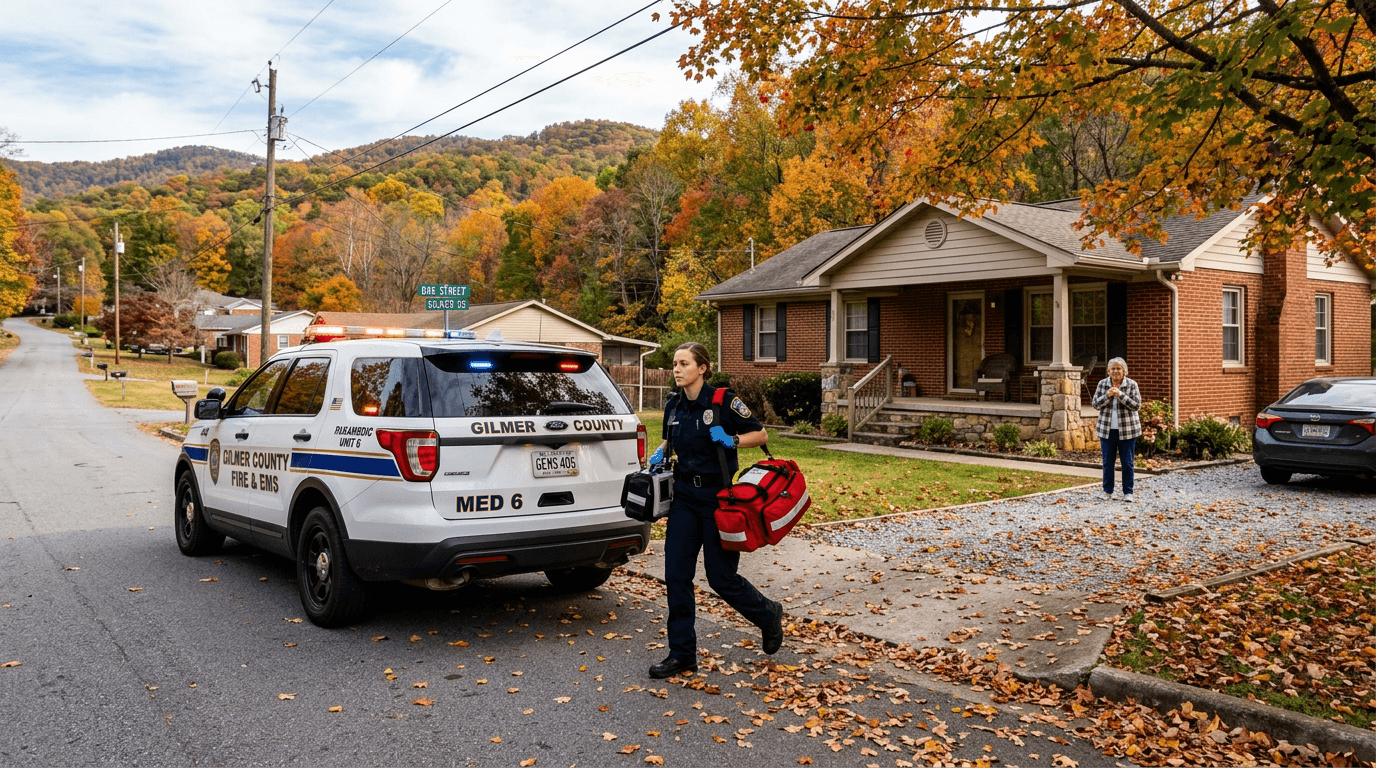
Gilmer County Fire & Rescue has launched a 90-day trial of a new around-the-clock program that sends a paramedic in a fast, single-responder vehicle to 911 calls alongside ambulances — a change aimed squarely at getting skilled medical help to Ellijay-area doorsteps faster when minutes matter most. The department calls it the Med Com program, and officials say the goal is quicker response, less crew fatigue, and more focus on the county's most serious emergencies, according to local media reports.
The concept is straightforward. For the next three months, a quick-response vehicle staffed by a paramedic will roll out on 911 calls 24 hours a day. Because it's smaller and faster to prep than a full ambulance, it can reach a scene sooner. It carries emergency supplies — including blood for emergency transfusions — but it does not transport patients. Instead, the paramedic can begin treatment on scene and, in many cases, free the ambulance to return to service when a hospital trip isn't needed.
- What: A new "Med Com" paramedic quick-response program from Gilmer County Fire & Rescue.
- When: A 90-day trial run, active 24 hours a day.
- How it works: A paramedic in a smaller, faster vehicle responds to 911 calls alongside ambulances.
- Carries: Emergency supplies and blood for emergency transfusions — but does not transport patients.
- Goal: Faster response, reduced crew fatigue and vehicle wear, and better focus on high-acuity calls.
Why the change matters for local families
When a household in Gilmer County dials 911 — for a heart attack, a bad fall, or a worried grandparent whose blood pressure is spiking — the county's current setup has one answer for all of it: an ambulance and its crew. As EMS Division Fire Chief Paul Beamon put it in local reports, that crew is responding to essentially every single call that comes in.
That one-size-fits-all approach creates a strain residents don't usually see. Emergencies arrive in very different levels of severity. Some callers simply want a check and reassurance. Others have a serious but non-life-threatening problem, like a broken bone. And some are facing a true emergency. When ambulances are tied up on lower-severity calls, a life-threatening one elsewhere can face a longer wait.
Officials were emphatic that residents are getting more, not less. Fire Chief Sam West said the effort is not a cut to service but a change in how the department uses its resources to serve the people of Gilmer County, according to local news reports. Ambulances still respond as always; the new unit simply adds a faster option for certain calls.
How Med Com works on a call
Under the program, the paramedic vehicle can arrive first and size up the situation. If an ambulance isn't necessary, the paramedic can treat the patient on scene. If transport is needed, the paramedic provides care until the ambulance arrives — meaning help begins sooner either way.
Paramedics are the most highly trained emergency medical technicians, able to deliver a wide range of medical care before a patient ever reaches a hospital. Beamon noted that the department's paramedics are trained to handle just about everything, and the new unit is built to respond to major medical and trauma situations, local reports said.
Nothing changes about how you get help: keep calling 911 for any emergency. The new program simply gives dispatch another fast tool — a paramedic who can get to your door quickly and start care while the system decides whether an ambulance transport is needed.
The problems it's meant to solve
Beamon, who previously served as EMS Director at Atlanta's Grady Memorial Hospital and ran a similar system there, said most emergency medical services across the country use this kind of tiered response. The benefits, he explained, add up in several directions:
- Speed. A smaller vehicle reaches scenes faster and takes less time to prepare than an ambulance.
- Crew health. Constant ambulance runs wear out both personnel and equipment; spreading the load helps reduce fatigue.
- Cost and safety. The lighter unit uses less fuel on a response and is safer to operate on the road.
- Focus. Freeing ambulances lets the department concentrate resources on the most serious, high-acuity calls.
What happens after 90 days
The trial is a test, and the numbers will decide its future. If the first 90 days show improved efficiency and better results for patients, officials say the plan is to keep the program running permanently — which Beamon described as the ultimate goal, according to local reports.
Note: This is a temporary trial. County officials indicated the Med Com program will only become permanent if the initial 90-day period demonstrates it improves response and efficiency.
For now, the change is one Gilmer County families may never notice on a good day — and may be very glad for on a bad one. Residents can find general emergency preparedness information and sign up for local alerts through Gilmer County Emergency Management.
Stay connected
For more updates on this program and other local news, visit Ellijay Georgia Community Website and join the conversation in our Community Forum. Have thoughts on how emergency services are working in your neighborhood? We'd love to hear them. Follow us on Facebook, Instagram, and X to keep up with the latest.
Read more public safety and healthcare stories from around Gilmer County.

Continue this story for free.
Stay informed about Ellijay Georgia. Enter your email to access the full story and receive local news and community updates.
Free to read · No password to remember
New here? We’ll email you a sign-in link and code. Already a reader? Use your usual email.
Read next

Gilmer County Approved to Install a Safe Haven Baby Box, Now Needs the Community to Pay for It
Gilmer County Fire Rescue has cleared the path to install a Safe Haven Baby Box, giving parents in crisis a secure, anonymous way to surrender an infant. Now the department needs donations to actually build it.
Read the story ↗

Comments
Your draft stays here while you sign in. Be respectful and keep it local.
No comments yet.