From Cherokee Homeland to Apple Capital: A Short History of Ellijay, Georgia
Long before it became the Apple Capital of Georgia, Ellijay was a Cherokee town at the meeting of two rivers. Here is how a Blue Ridge mountain crossroads became the community we know today.
Ellijay Community Staff
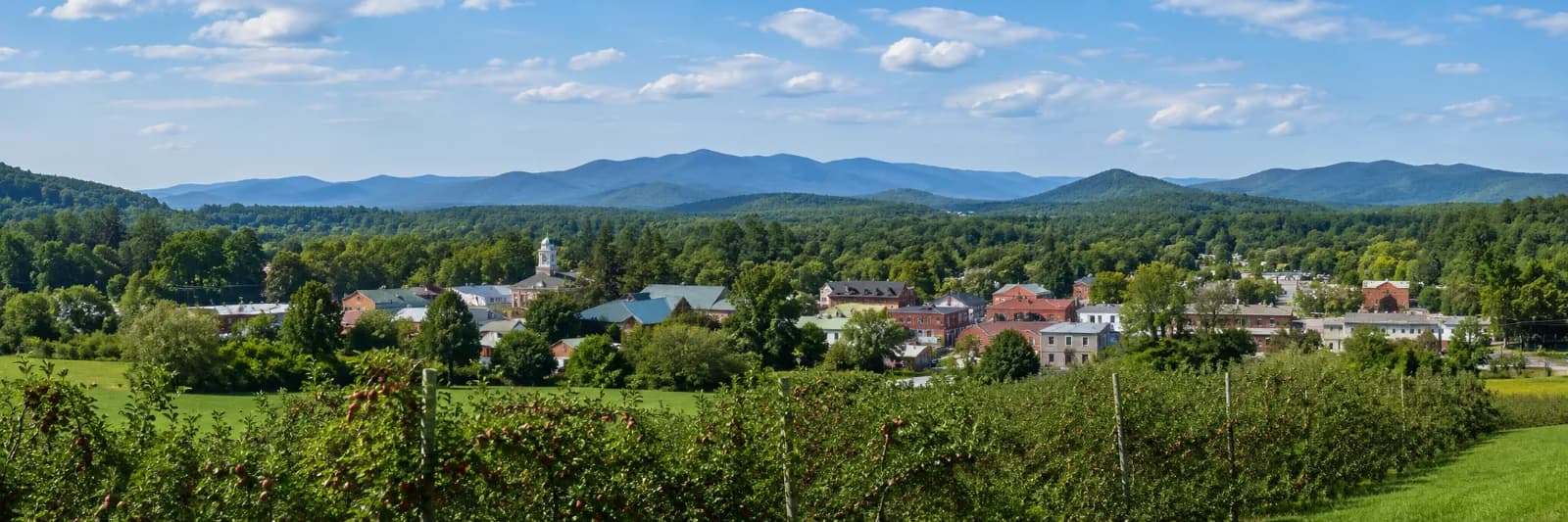
Tucked into the Blue Ridge Mountains about 80 miles north of Atlanta, Ellijay is the kind of place people now drive hours to reach — for the apples, the rivers, the fall color, and the slow turn of a downtown square. But long before it was a weekend escape or the self-styled “Apple Capital of Georgia,” Ellijay was a Cherokee town at the meeting of two rivers. This is the short version of how it got here.
- County: Seat of Gilmer County, created December 3, 1832
- Became county seat: 1834
- Setting: Where the Ellijay and Cartecay rivers join to form the Coosawattee; elevation 1,280 feet
- Nickname: The “Apple Capital of Georgia”
- Population (2020): City of Ellijay 1,862; Gilmer County 31,353
A Cherokee name at the meeting of the waters
The name “Ellijay” comes from the Cherokee language, though its exact meaning is debated. It has been variously translated as “place of green things,” “many waters,” and “new ground,” and it appears on early colonial maps in forms such as “Elejoy.” Any of those readings suits the place: a Cherokee village once stood at the confluence of the Ellijay and Cartecay rivers — the very spot the modern town occupies — near the headwaters of the Coosawattee.
In the 1830s, hundreds of Cherokee families farmed these river bottoms. Chief White Path (Nunnatsunega), a War of 1812 veteran and prominent voice among the mountain Cherokee, was associated with this area.
Removal and Fort Hetzel
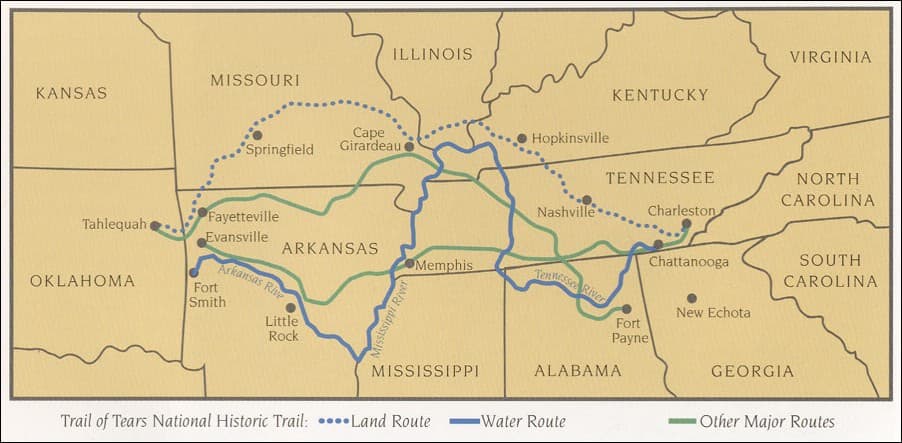
That world was undone within a few short years. After the disputed Treaty of New Echota was signed in December 1835, the federal government moved to force the Cherokee west. In 1837 a removal stockade, Fort Hetzel, was built in present-day East Ellijay near the river junction. Between May 26 and June 24, 1838, soldiers captured and marched 884 Cherokee people from Fort Hetzel onto the Trail of Tears — among the highest counts of any removal fort in Georgia.
A county named for a governor
Gilmer County had been carved from former Cherokee land on December 3, 1832, and named for George Rockingham Gilmer, a two-term governor of Georgia. The land was parceled out to settlers through the 1832 Cherokee Land Lottery, and in 1834 Ellijay was made the county seat. Twenty years later, in 1854, parts of Gilmer were combined with land from Union County to create neighboring Fannin County — which is why a few “Ellijay-area” landmarks today actually sit just over the county line.
The railroad and the timber boom
For decades Ellijay stayed a remote mountain town. That began to change in 1884, when the narrow-gauge Marietta and North Georgia Railroad finally reached town, connecting Gilmer County to the wider world and setting off a boom in the timber industry. The line later passed to the Louisville & Nashville Railroad in 1902, and a version of that route still runs through town today.
From cotton to apples
Early Gilmer County farmers grew cotton, but when the boll weevil devastated Georgia’s cotton crop in the 1920s, the county’s growers turned to the fruit that would come to define it. (The City of Ellijay credits John W. Clayton with introducing apples to the county in 1903.) The mountain valleys proved ideal, and Gilmer County now produces more than 600,000 bushels of apples a year — more than any other county in Georgia, with roughly 60 percent of the state’s apple trees.
The crop became a celebration. The first Georgia Apple Festival was held in Ellijay in 1971, organized by the Ellijay Lions Club and the Gilmer County Chamber of Commerce. Today it draws crowds across two October weekends and anchors the area’s identity as the Apple Capital of Georgia.
Ellijay’s old courthouse on the square was built in 1898 — as the Hyatt Hotel. It is said to be the only county courthouse in Georgia not originally built to be one. It served as the Gilmer County Courthouse from 1934 until it was condemned in 2003 and demolished in January 2008; a near-replica replacement opened in 2009.
The modern mountain town
The opening of Georgia Highway 515, the Zell Miller Mountain Parkway, in 1991 made the mountains far easier to reach and turned tourism into a mainstay. Visitors come for whitewater on the Cartecay, the Chattahoochee National Forest, fall foliage, cabin getaways, and a downtown square full of shops and restaurants. A wine scene took root in 2007, when Cartecay Vineyards became the area’s first winery, and North Georgia wine country has grown around Ellijay ever since.
Through all of it, Ellijay has stayed small — fewer than 2,000 people inside the city limits — even as Gilmer County has grown past 31,000. It is still, in the end, a town at the meeting of two rivers.
Timeline: Ellijay through the years
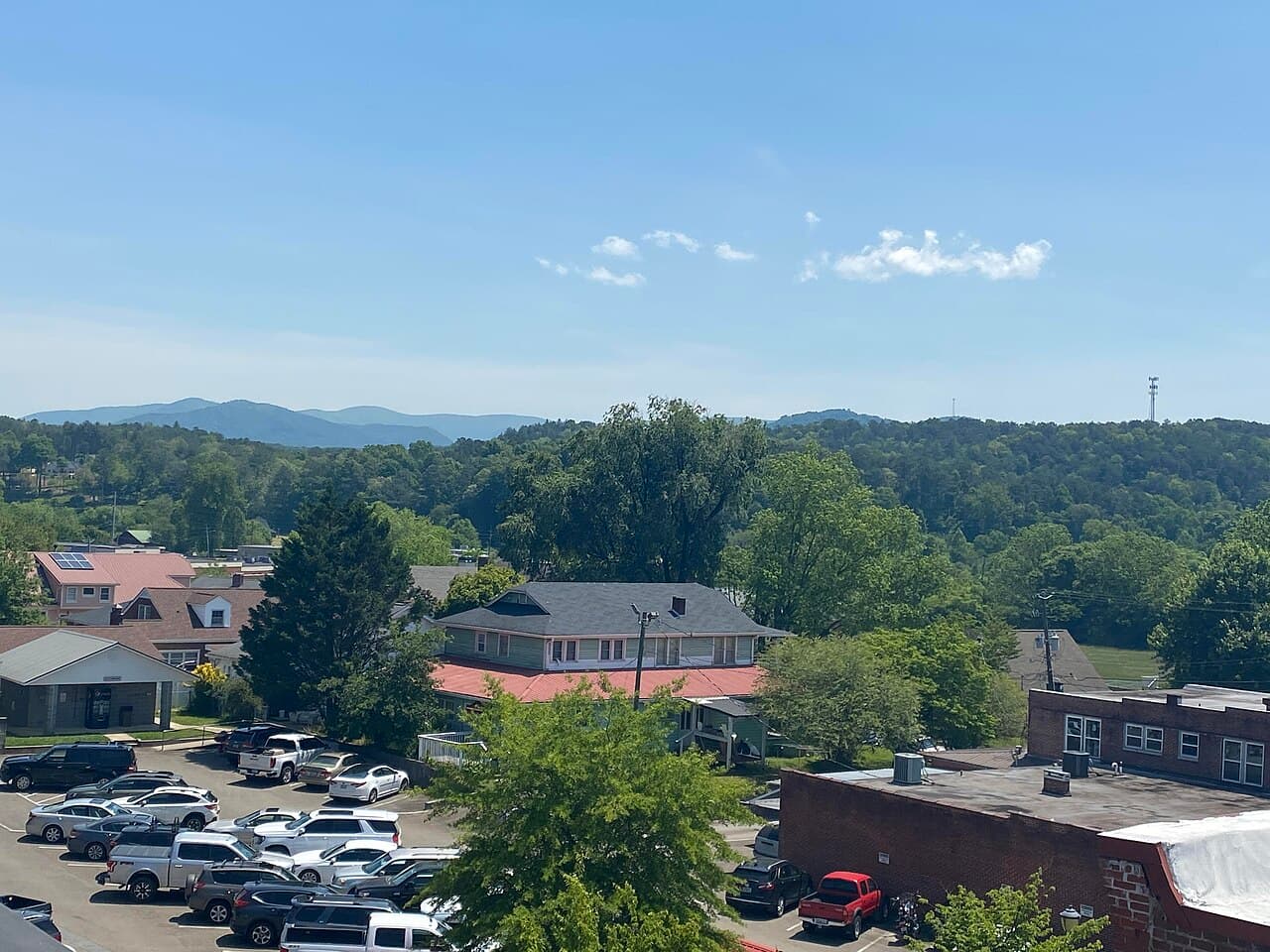
Cover photo: “View from downtown Ellijay, GA” by Tamparitus, licensed CC BY-SA 4.0 via Wikimedia Commons. Sources include the New Georgia Encyclopedia, Wikipedia, the City of Ellijay, the Georgia Apple Festival, and Southern Spaces.
Continue this story for free.
Stay informed about Ellijay Georgia. Enter your email to access the full story and receive local news and community updates.
Free to read · No password to remember
New here? We’ll email you a sign-in link and code. Already a reader? Use your usual email.
Read next
Before the Apples: Ellijay, Fort Hetzel, and the Trail of Tears
Long before it was a county seat, Ellijay was a Cherokee community at the meeting of two rivers. The story of how it was taken — at a stockade called Fort Hetzel — is one of these mountains' most painful chapters.
Read the story ↗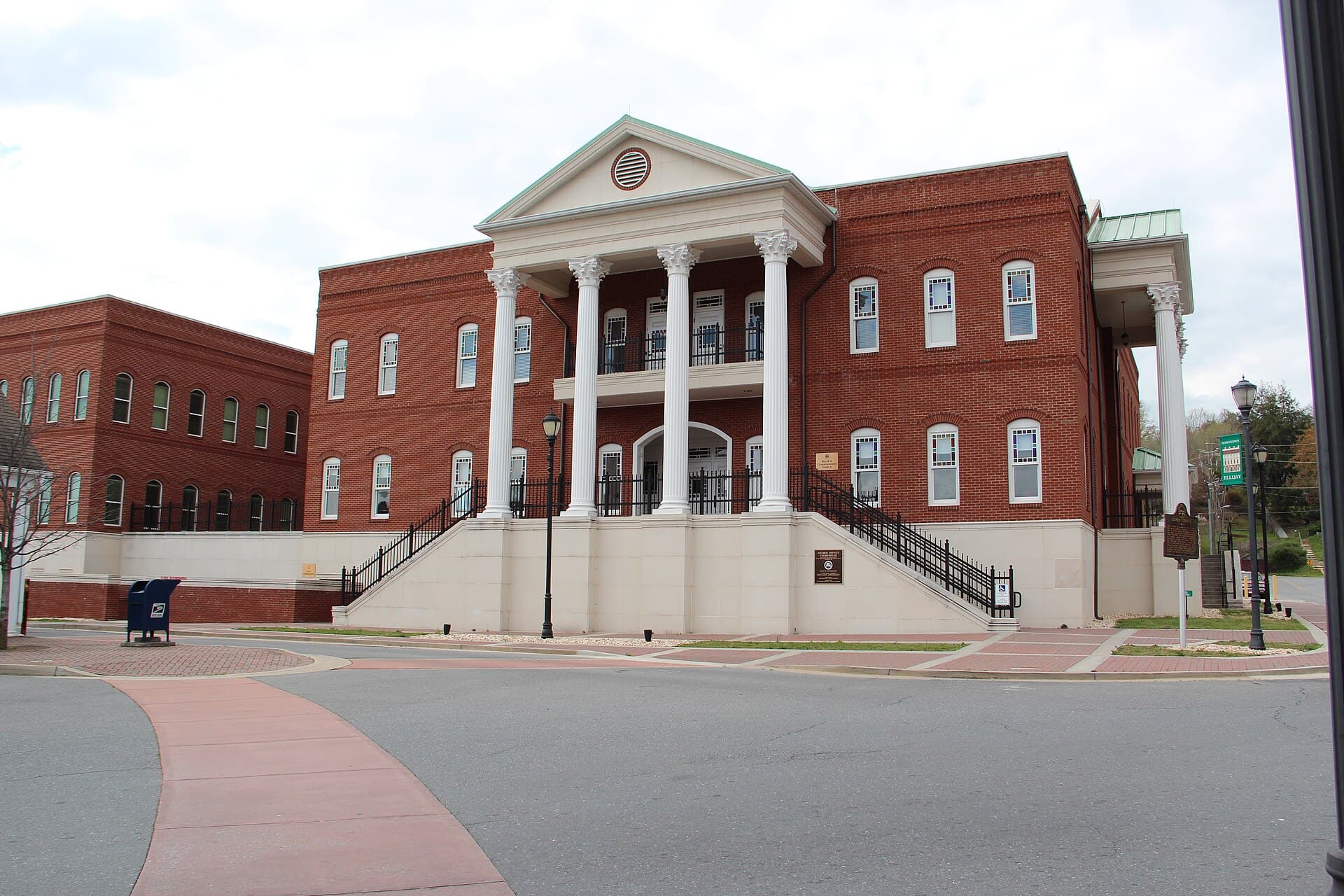

Comments
What does this mean for your neighborhood? Share your experience or ask a question.
Your draft stays here while you sign in. Be respectful and keep it local.
No comments yet. Be the first to share your thoughts!